
Passing Retailer Audits: BSCI, SMETA, ISO 9001 and Production Testing — A Factory Readiness Guide
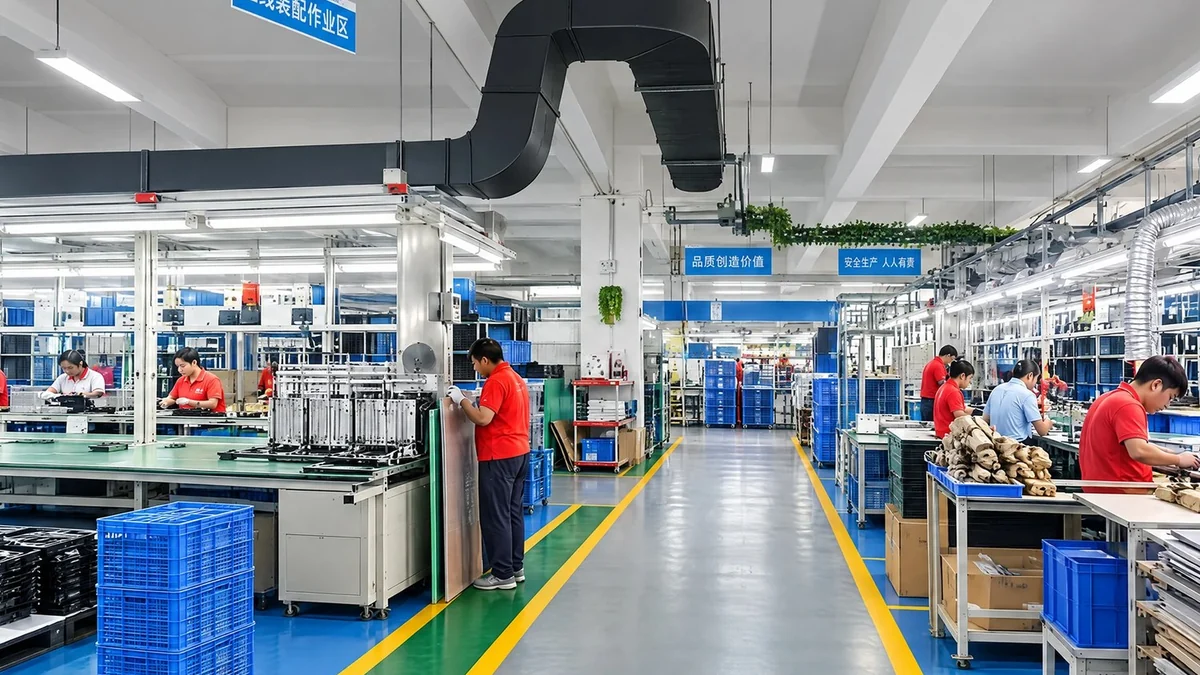
- Major Western retailers evaluate factories across social compliance (BSCI / SMETA), quality systems (ISO 9001), and live production-line testing.
- Prepare audit documentation early: calibrated test-equipment records, IQC/IPQC logs, worker safety records, and valid third-party lab certificates.
- Working directly with an audited Foshan manufacturer eliminates trading-company handoffs and speeds up retailer vendor onboarding.
For a retail buyer, the audit file is not due diligence theatre — it is the listing decision. Product, price and packaging can all be right, and the program still stops because the factory's social audit has expired, the quality certificate cannot be produced, or production testing has not even started.
In the research behind this guide, factory audit requirements rank as a Strong concern for retail buyers, on primary retailer documents. This post explains which audits and tests are actually required by whom, how the timelines really run, and what a buyer should be able to request from a ready factory today. Read it as a readiness standard to measure any factory against.
1. Which Buyers Require Which Audit
Start by separating three different instruments that are often confused. Social/ethical audits examine labor, health and safety, environment and business ethics at the facility. Quality-system certification, principally ISO 9001, examines whether the factory's management system is documented and followed. Retailer production testing examines the product itself, batch by batch or model by model — it is not an audit of the factory at all, and passing one does not substitute for the other.
The clearest public benchmark is Walmart. Its Responsible Sourcing guidance (updated September 2024) requires facilities to submit an acceptable audit from approved programs, including amfori BSCI, SEDEX SMETA, SA8000, WRAP and RBA, with reports reviewed and color-rated.
Other retail chains run equivalent lists with different names; the practical consequence is the same — a current report from a recognized program, at an acceptable grade, is a precondition, not a differentiator.
ISO 9001 is the baseline quality claim factories lead with: Ningbo Panda, for example, states ISO 9001 with CE/CB/ETL/GS/EMC documents released with the quotation — that pairing of system certificate plus product certificates is the minimum document set a retail buyer expects at RFQ stage.
2. Production Testing: Plan Around a ~10-Week Timeline
The timeline that surprises first-time retail suppliers is not the audit — it is production testing. Under the Walmart protocol as summarised by the Lifeworks supplier portal (2026), production testing through its designated laboratory system (referred to as CTL) should be planned at around 10 weeks; one documented case ran 78 days from application to report. Test reports are valid for 1 year, and retest or re-audit should be scheduled 60 days before expiry so the program never lapses mid-season.
What does production testing actually check on an air fryer oven? More than electrical safety: the same protocol summary records that manual typos, QR codes, the customer-service number and app connection are tested, alongside items such as Washington State PFAS reporting and California Prop 65 checks. In other words, your artwork, manual and claims file are part of the tested product.
Build the 10 weeks into your launch plan backwards from the shelf date — a factory that raises testing only after the deposit has been paid has already cost you a season.
3. The Validity and Renewal Calendar
Almost everything in the audit file expires, and mostly on a 1-year rhythm: the factory social audit (for example BSCI) is valid 1 year, and Walmart production-test reports are valid 1 year (Lifeworks supplier summary of the Walmart protocol, 2026). Certificates for the product itself follow their own surveillance cycles, and ISO 9001 runs on its own certification and surveillance schedule.
A ready factory manages this as a calendar, not as a scramble: a single register listing each audit, certificate and test report, its expiry date, and the renewal trigger date (expiry minus 60 days is a sensible default, matching the retailer retest guidance above).
Ask to see that register — or at least the current report dates — during evaluation, not after nomination. A report that expired last month with no renewal booked tells you more about a factory's retail readiness than any brochure. At Linden, the register is maintained on exactly that basis, and the current documents are shared with buyers as follows:
| Audit / certificate | Grade / status | Valid until |
|---|---|---|
| amfori BSCI | Current report — grade as stated in the report, shared with buyers during vendor evaluation | As stated in the current report |
| SEDEX SMETA | Current report available on the same basis | As stated in the current report |
| ISO 9001:2015 | Certificate copy included in the audit document pack | Per the certificate's own surveillance schedule |
4. What Auditors Inspect on an Oven Line
Social auditors walk the whole facility — working hours and payroll records, fire exits and machine guarding, chemical storage, dormitories and canteens where they exist, and worker interviews conducted away from management. Quality and buyer technical audits focus on the line itself.
On an air fryer oven line, expect scrutiny of: incoming inspection for heating elements, motors, PCBA and food-contact parts; in-process controls at assembly and wiring (the connector and wiring work implicated in past category recalls); 100% end-of-line electrical safety testing such as hipot/dielectric and leakage checks; aging and function testing; and traceability — whether a finished unit can be traced to its batch, materials and test records.
You do not need to take a factory's word for any of this. The documents generated by these systems — inspection records, test logs, training records, calibration certificates — either exist and are current, or they do not. On our KA1203 line, every unit passes the 100% end-of-line electrical safety tests — hipot/dielectric and leakage checks — plus an aging run before packing, and each finished unit carries a traceability code that links it to its production batch, material lots and line-test record.
5. Corrective Actions: How Findings Get Closed
No real audit ends with zero findings; readiness is measured by what happens next. The standard mechanism is a corrective action plan (CAP): each finding gets a root cause, a corrective action, an owner and a deadline, with evidence submitted for closure — a photo of the corrected condition, a revised procedure, a training record. Retail programs review and color-rate reports, so an overdue or cosmetic CAP damages the rating even when production quality is good.
When you evaluate a factory, ask for a sanitised example: a past finding, the action taken, and how long closure took. A factory that has genuinely closed findings can describe the process in detail; a factory that claims it has never had a finding is telling you something else.
Agree at contract stage who owns CAP work generated by your program's audit, and the timeline your retail customer's vendor system imposes.
At Linden, CAP items are owned by the Quality Department, each with a root cause, an action owner and a closure deadline set against the retail program's timeline, and a sanitised corrective-action example — a past finding, the action taken and the closure evidence, with identifying details removed — is available to buyers on request.
6. Documents a Buyer Should Be Able to Request Today
Use this as the request list when you evaluate any factory for a retail program — a ready factory can send most of it within one business day:
Current social audit report (BSCI, SMETA or equivalent) with grade and validity dates
ISO 9001 certificate with certificate number and issuing body
Product certificates and test reports for the exact model (for example ETL/UL, CE, RCM documentation)
Most recent production-testing report, if the factory supplies comparable retail programs
QC flow summary: incoming, in-process and final inspection, plus 100% line-test list
A sanitised corrective-action example showing a closed finding
The renewal register: what expires, when, and when renewal is booked
Linden can send the following today: our current social-audit report and quality-system certificate, shared under the audit programs' distribution rules; our product files, compliance pack, quality baseline (golden sample and inspection standard) and the certificate and test reports for each model and market route; and one sanitised corrective-action example.
Prepare Your Program With the Audit File First
If you are planning a retail launch, send us your target retailer, shelf date and market list before you finalise the product spec — the audit and production-testing calendar has to be built backwards from that date. Contact Linden at [email protected] or +86 156 2237 7841 and ask for the audit document pack.
Ready to Spec Your OEM/ODM Air Fryer Oven Line?
Get factory FOB pricing, test certificates, and 500–1,000 unit MOQ customization options within 24 hours.
Related Sourcing Guides
Don't Copy Ninja: Design Patents, Mold Ownership, Exclusivity and Territory Rights in Air Fryer Ovens
Every season, a buyer finds a hero product they want to match: a glass-basket fryer that is selling out, a dual-basket model dominating search results, a...
Which Air Fryer Oven Should You Launch? Capacity & Feature Tiers Mapped to Channel (E-commerce, Retail, Premium)
"Which model should we launch?" is the wrong first question. The right question is: which capacity and feature tier fits my channel, my shelf price, and...