
How Does an Air Fryer Oven Work? A Buying Guide

Contents
- Air fryer ovens combine high-wattage heating elements (1400W–1700W) with high-velocity convection fans inside a compact, diamond-embossed cavity.
- True cooking uniformity depends on airflow circulation, top-and-bottom heating balance, and accurate thermostat control — not just preset count.
- For private-label lines, match cavity size (12L, 16L, or 30L) and control interface (mechanical, digital IMD, or TFT) to your target retail price tier.
In plain terms, it is a compact convection oven with a high-velocity fan. That is the entire secret — and once you look at it that way, spec sheets become much easier to read.
Short Answer
An air fryer oven heats food with red-hot metal heating elements (typically at the top of the cavity) while a high-speed fan drives hot air across the food. Because the cavity is compact, the hot air has nowhere else to go and recirculates continuously over the food's surface.
This constant airflow strips away surface moisture — and a dry surface is the key to browning and crisping. Deep frying achieves the same effect with hot oil; an air fryer oven does it by pushing hot air to its full potential.
There is no separate "air fry" technology hiding inside the housing. Air fry, bake, broil, and dehydrate are simply different combinations of temperature, time, and fan speed running on the same hardware. When comparing models — ours or anyone else's — compare the hardware. The preset labels take care of themselves.
Four Core Components That Do the Work
Heating Elements
LINDEN ovens use tubular heating elements rather than a single heating coil. The 16L AE1606 uses six 350W heating tubes — two upper-outer, two upper-middle, and two bottom — for a total rating of 1,400W. The 30L AE3007 uses the same three-zone layout with six 425W heating tubes for 1,700W total.
Top heat drives browning and crisp tops, while bottom heating tubes ensure the base cooks through. Units with weak top-only elements leave food cooked but pale, and no number of preset buttons can fix that.
When requesting a quote, ask for the element wattage breakdown and confirm whether the rated power on the spec sheet is total machine power or element-only power — factories quote both ways.
Fan
The fan is what separates an air fryer oven from a basic toaster oven. Positioned behind or above the heating elements, it moves air fast enough to even out hot and cold spots across a compact cavity. Better models offer multiple fan speeds: full speed for fries and wings; low speed or off for cakes that won't sink or crack. If a spec sheet says nothing about fan speed, assume it only has one.
Cavity
Size matters in two ways. If the cavity is too large for the heating elements, it heats slowly and browns poorly; if too small, food crowds together, steam cannot escape, and food steams instead of crisping. What truly matters is not the liter rating on the carton, but usable tray area and clearance between rack levels.
A 30L oven — like our AE3009 — earns its footprint because a whole chicken or a family batch of vegetables fits on a single layer with room around the edges for airflow. Its rack measures 352 × 300 mm; compare that against the sheet pans your customers already own.
Exhaust Vent & Drip Tray
Wet ingredients release steam, and that steam needs somewhere to go. The exhaust vent lets moisture escape; the drip tray catches rendered fat from meat. Neither sounds glamorous until end users complain about smoke or soggy fries. During sample testing, load fatty food — sausages or skin-on chicken thighs — and watch where the steam exits and how grease collects in the tray. That ten-minute test tells you more than any brochure.
How a Cooking Cycle Works
- Preheat.Heating elements bring the compact cavity to target temperature in just a few minutes — much faster than a full-size oven. Skipping preheating is the most common reason a first batch falls flat.
- The fan takes over.Once the food goes in, moving hot air wraps around it from every angle — which is why wire racks and mesh baskets matter: put food in a deep, solid-bottom pan and you block the airflow underneath.
- The surface dries.As moisture leaves the surface, the surface temperature rises above the boiling point of water — and browning begins.
- The inside catches up.Heat conducts inward while the exterior continues to crisp. That gap between outside browning and inside doneness is why thick-cut foods perform better at a slightly lower temperature for longer, rather than at maximum heat.
- Rest to finish.Resting for two to three minutes after opening the door lets residual heat even out the interior, just like a conventional oven.
Read the spec sheet so you aren't led around by sales pitches
| Specifications | What It Tells You | What It Doesn't Tell You |
|---|---|---|
| Power | The ceiling on how fast the oven delivers heat; North American models are capped by standard household outlet limits | Whether heat distributes evenly |
| Capacity (L) | General size tiers: Compact, Mid-Size, Family-Size | Whether your customer's baking pan or a whole chicken actually fits inside |
| Temperature Range | A low end near 100°F means it can genuinely dehydrate; a high end around 425–450°F covers roasting and browning | How accurate the temperature really is at those extremes |
| Number of Functions | How controls are organized — our display models feature 8 functions | Unrelated to cooking quality; preset count is software, not hardware |
| Fan Speed | Whether it delivers both gentle baking and high-heat crisping | Fan noise — something only a physical sample can tell you |
| Accessories | Number of wire racks and baking pans, rotisserie kit, air fry basket — determines what your customer can cook on day one | How easy the accessories are to clean — a leading source of customer complaints and returns |
One habit pays off: for every selling point on a quote sheet, ask "Which component inside the machine makes this true?" "Faster cooking" should point to wattage and fan design; "even heating" should point to cavity geometry and rack positioning. A claim without hardware behind it is just marketing copy — and it won't survive long with your customers.
Three LINDEN Models, Side by Side
This guide is built around the models LINDEN actively manufactures. The table below is a working spec sheet, not a brochure summary — use it to check quotes line by line. Cells marked "Contact us to confirm" must be verified directly with our team before you list or specify that model.
| Specifications | AE1606(16L) | AE3007(30L) | AE3009(30L) |
|---|---|---|---|
| Capacity | 16L | 30L | 30L |
| Voltage | 220–240V,50/60Hz | 230V,50Hz | 120V/60Hz and 220–240V, 50/60Hz |
| Power | 1,400W | 1,700W | 1,700W |
| Temperature Range | 50–230°C (depending on function) | 25–230°C | 80–230°C / 180–450°F |
| Heating Elements | 6 × 350W: 2 top outer, 2 top inner, 2 bottom | 6 × 425W: 2 top outer, 2 top inner, 2 bottom | Contact us to confirm |
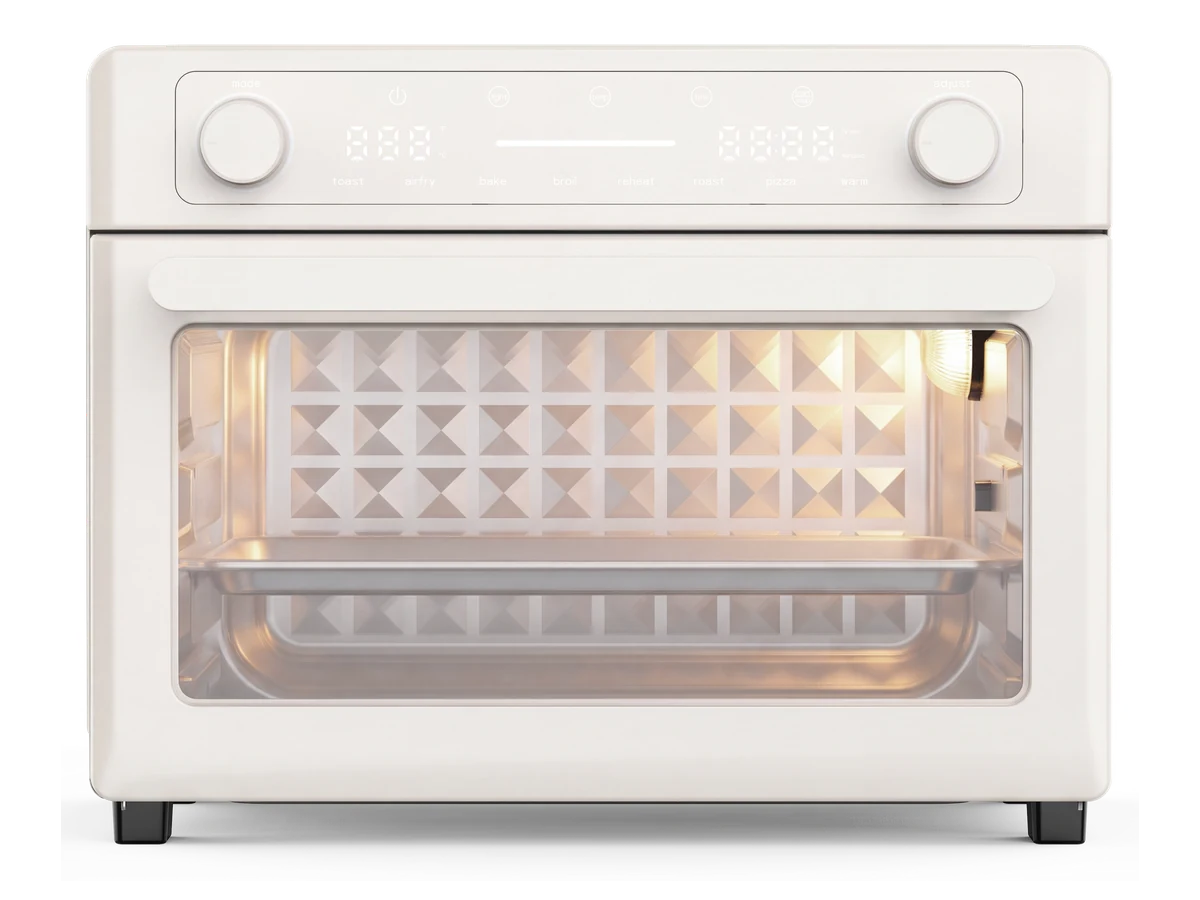
| Functions | 8 functions: Reheat, Air Fry, Bake, Grill, Defrost, Ferment, Dehydrate, Cook | 9 presets + 6 manual modes + 7 steam-assist modes | 8 functions: Toast, Air Fry, Bake, Broil, Reheat, Roast, Pizza, Keep Warm |
| Rack Levels | Contact us to confirm | 3 | 3 |
| Cavity | Contact us to confirm | 430 Stainless Steel | 430 Stainless Steel / Galvanized Sheet |
| Door | Contact us to confirm | Pull-Down Door | Pull-Down Door |
| Product Dimensions | Contact us to confirm | 428 × 400.8 × 389.6 mm | 428 × 406 × 334 mm |
| Certifications | Confirmed by model and voltage — contact us for documentation | CE | CB / CE / ETL |
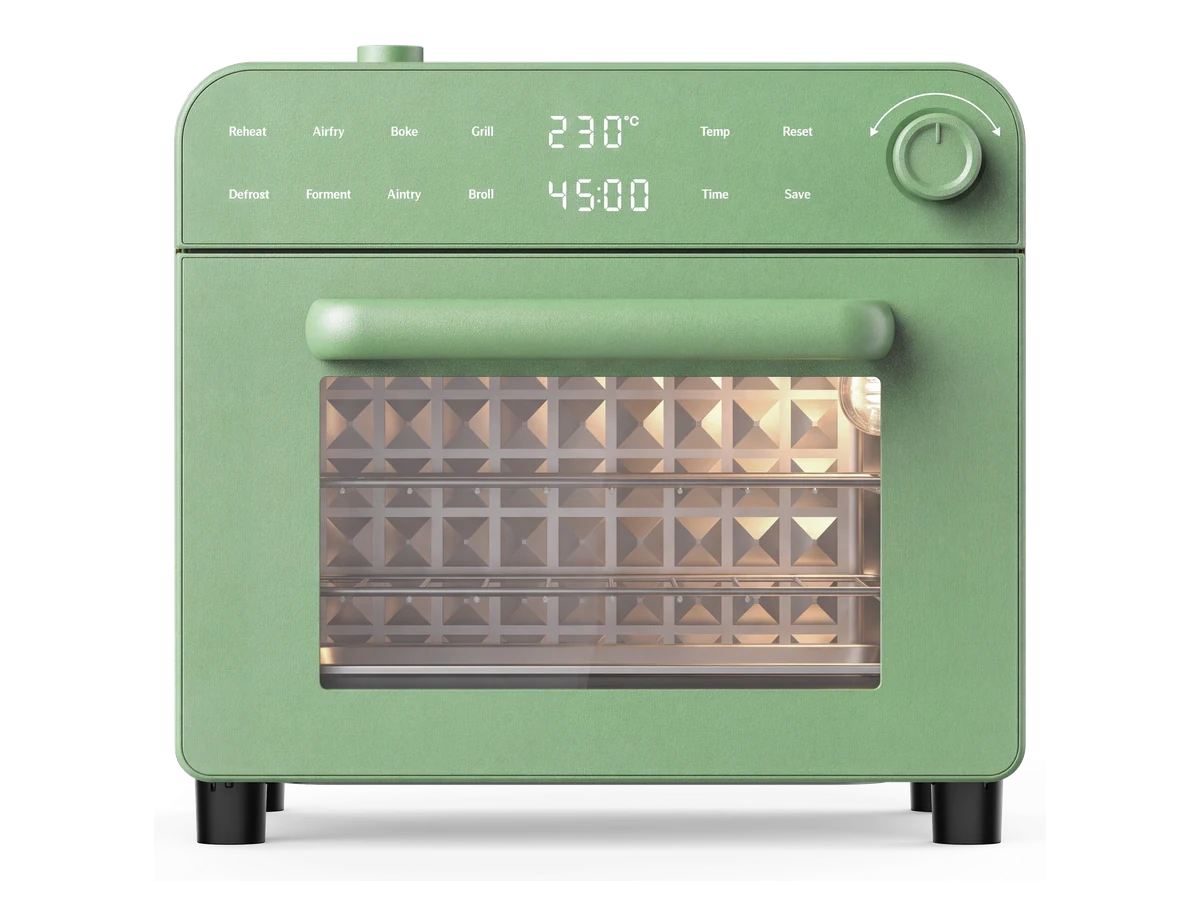
Each of the AE1606's eight functions has factory defaults — and since those defaults are the first thing your customers see out of the box, they are worth knowing: Reheat 175°C / 5 min, Air Fry 230°C / 18 min, Bake 205°C / 40 min, Broil 230°C / 14 min, Defrost 100°C / 40 min, Ferment 50°C / 60 min, Dehydrate 80°C / 120 min, Simmer 150°C / 60 min.
The dial adjusts temperature in 5°C increments and time in 1-minute increments, and the menu remembers the last setting used. Preheating applies to Reheat, Air Fry, Bake, and Broil — not to Defrost, Ferment, or Dehydrate. In case of an abnormality, the unit displays error codes: E1, E2, E4, or E5.
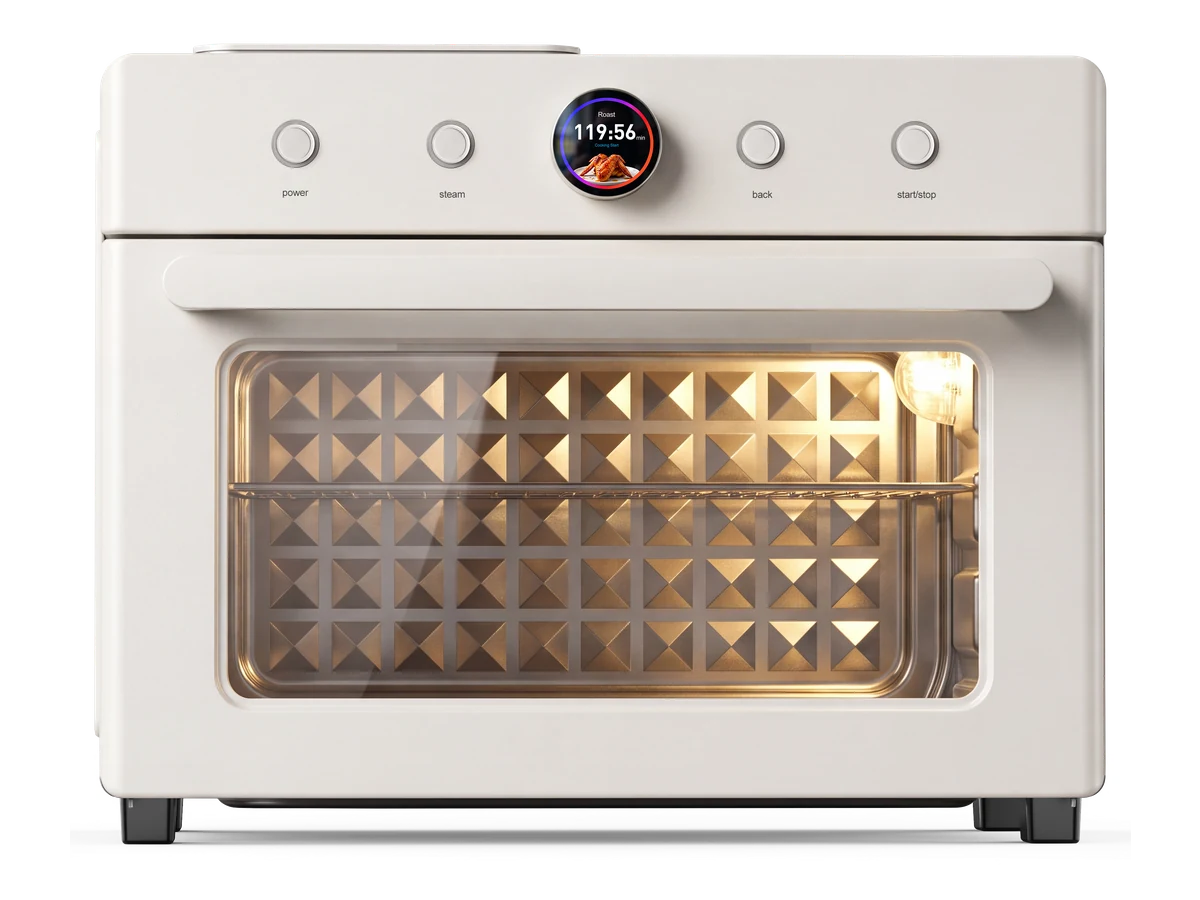
The AE3007 is the steam model in the lineup. Alongside nine standard presets (Fries, Wings, Steak, Shrimp, Vegetables, Toast, Pizza, Cake, Reheat), it adds seven steam-assisted modes: Juicy Chicken, Tender Fish, Steam Shrimp, Juicy Beef, Bread Refresh, Gentle Vegetables, and Gentle Reheat. Steam keeps lean proteins from drying out under high-velocity hot air — chicken and fish are the two foods where buyers notice the difference first.
Choose Size by What Fits Inside, Not Just the Liters
| Size Tier | Best For | Note |
|---|---|---|
| ~12L (LINDEN lineup starts at 12L) | 1–2 people; fries, wings, reheating; compact kitchens and dorms | A whole chicken usually won't fit with room to spare |
| Mid-Size: AE1606 (16L) | Couples and small families; a personal pizza or a tray of vegetables | Check pizza diameter — liter ratings don't tell you cavity width |
| ~30L: AE3007 & AE3009 | Families; whole chickens, larger baking pans, batch cooking, high-volume dehydrating | Countertop depth and door-opening clearance; AE3007 measures 428 × 400.8 × 389.6 mm, AE3009 measures 428 × 406 × 334 mm — measure the kitchen, not just the oven |
Its trade-offs, stated plainly
They aren't magic, and product pages that pretend there are no trade-offs only invite returns. Lean cuts dry out if left too long because high-velocity hot air is unforgiving. Overcrowded trays won't crisp — large batches need flipping or two rounds. Greasy foods can smoke at max temperature, which is an exhaust and cleaning matter, not a defect.
And the fan makes noise — roughly microwave level, except it runs for twenty minutes instead of three. Buyers who explain these points in plain language on their product pages get fewer surprises and better reviews; those promising "deep-fried results with zero trade-offs" get the opposite.
Frequently Asked Questions from Importers
Is an air fryer oven the same thing as a convection oven?
In principle, yes. Both use a fan to circulate hot air. An air fryer oven is smaller, typically runs hotter for its size, is built for the countertop, and uses racks and trays designed for crisping. That compact cavity is why it preheats faster and often browns better at the same setting than a full-size convection oven.
Does it still need oil?
A little oil helps. A teaspoon or a light mist improves browning and helps seasoning stick. You never need the liters of oil used in a deep fryer, and naturally fatty foods — chicken wings, drumsticks, salmon — often need none at all.
Can it roast a whole chicken?
Mid-size or 30L models can, provided the bird fits with clearance on all sides for airflow. Check the cavity height and width against the actual chicken sizes sold in your target market — bird weights vary by country, and so does the answer.
Why did the first batch come out soggy?
It almost always comes down to one of three things: overcrowding the tray, skipping preheat, or using a solid pan that blocks airflow. Spread food in a single layer, preheat, and use a wire rack or mesh basket. Most "first batch" complaints are solved without touching the settings.
Is It Hard to Clean?
The racks and baking pans take most of the abuse, so choose dishwasher-safe accessories plus a slide-out crumb and drip tray. With smooth interior walls, the cavity wipes clean in a minute while the oven is still warm.
Sourcing air fryer ovens for your own brand? Tell us your target market, voltage, and capacity on our inquiry page, and we'll reply with matching models — complete with full spec sheets, not marketing brochures. Email [email protected], call 15622377841, or visit www.foslinden.com.
You May Also Be Interested In
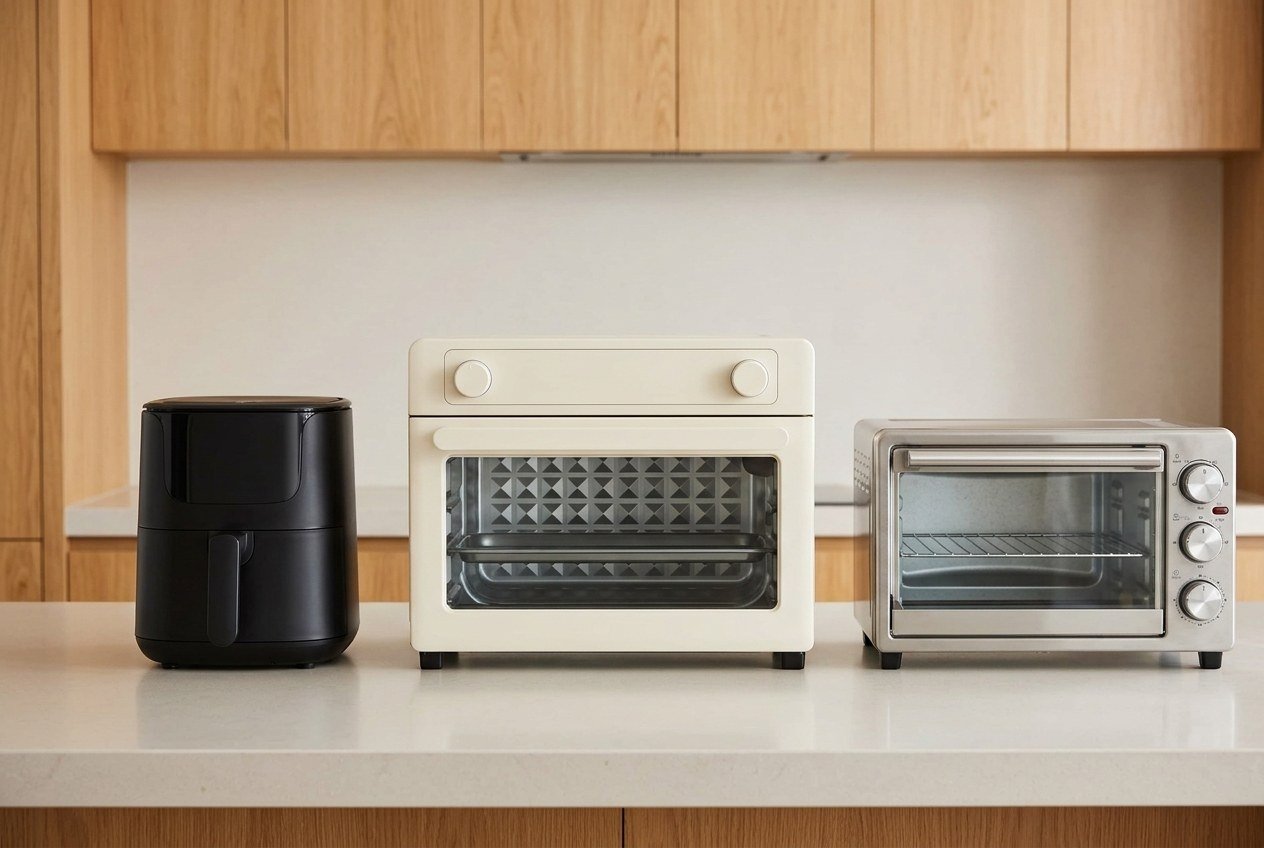
Air Fryer Oven vs. Air Fryer vs. Convection Oven
Capacity, energy use and price positioning compared side by side — so you can plan your line with the real trade-offs in view.

2026 Air Fryer Oven OEM / ODM Sourcing Guide
From first sample to mass production: MOQ, lead times, customization costs, and the questions to ask any factory.